Escape Room: Mystery Word
Game Overview
Escape Isn’t Just a Goal—It’s a Revelation in Escape Room: Mystery Word!
What if every locked door wasn’t a barrier—but a question waiting for your mind to answer it? What if the most thrilling “escape” you’ve ever experienced happened not in a basement or a vault, but inside your own head? Meet Escape Room: Mystery Word, the .io game that rewrites the rules of puzzle-based immersion—not with timers, pixel-perfect clicks, or frantic multitasking, but with quiet observation, layered inference, and the sheer joy of figuring things out.
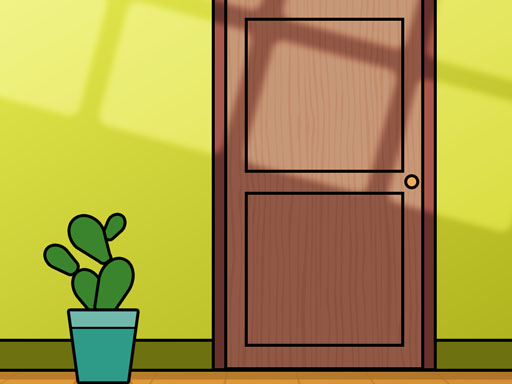
At its core, Escape Room: Mystery Word is a distilled, elegant escape experience built for the modern browser. You wake up—disoriented, alone—in a single, meticulously crafted room: no exposition, no tutorial, just silence and subtle detail. There are no health bars or fail states—only curiosity as your compass. Your objective isn’t to survive, but to understand: Why is that symbol etched into the floorboard? Why does the clock tick backward only when you’re not looking? Why does the reflection in the cracked mirror show a door that isn’t there? Every object, texture, and ambient sound is a potential clue—or a red herring designed to sharpen your perception.
What’s the Core Gameplay?
In Escape Room: Mystery Word, you navigate using intuitive point-and-click (or tap) interactions. You examine, combine, rotate, listen, and revisit—often looping back with new insight after solving a seemingly unrelated subsystem. The loop is hypnotic: observe → hypothesize → test → revise → reveal. There are no inventory limits or arbitrary restrictions—just your attention span, your memory, and the game’s carefully paced escalation of logic, pattern recognition, and lateral thinking.
- ✦ Pure .io elegance: Lightweight, instant-play, no downloads—just open and immerse
- ✦ Narrative through environment: Story emerges from spatial design, not cutscenes or text dumps
- ✦ No hand-holding, no punishment: Failures are invitations to look closer—not penalties
- ✦ Procedurally refined pacing: Each room adapts subtly to your solving rhythm, never rushing or stalling
- ✦ Aesthetic minimalism with maximal meaning: Every visual element serves dual purpose—as decoration and clue
Why you’ll love it? Because Escape Room: Mystery Word speaks directly to the player who finds euphoria in the click of a mental lock turning—not through force, but through clarity. It’s for solvers who crave depth over speed, atmosphere over adrenaline, and the rare satisfaction of an answer that feels earned, not handed down. Whether you’re unwinding after work or sharpening your cognitive edge on a lunch break, Escape Room: Mystery Word meets you where you are—and rewards you for staying present.
Dive into Escape Room: Mystery Word today—and discover how much the world reveals, the moment you stop searching for answers and start listening to questions.
How to Play
How to Play Escape Room: Mystery Word: Your Complete First-Time Guide
You’ve just stepped into a quiet, intriguing room—and the door clicked shut behind you. Don’t panic. Escape Room: Mystery Word is designed for everyone: no prior puzzle experience needed, no timer pressure at first, and no hidden jargon. Within 60 seconds, you’ll know exactly what to look at, what to try, and why your next guess might be the one that unlocks everything. Let’s begin.
1. Your Mission: The Objective
Find and correctly input the Mystery Word—a single, hidden keyword—using only clues scattered throughout the room. Once entered, the door opens and you escape. Every interaction (clicking objects, reading notes, combining items) exists to reveal letters, patterns, or logic that points to that one word.
2. Taking Command: The Controls
Disclaimer: These are the standard controls for this type of game on mobile. The actual controls may be slightly different.
| Action / Purpose | Key(s) / Gesture |
|---|---|
| Look Around / Pan View | Drag with finger (mobile) or mouse (desktop) |
| Examine an Object | Tap (mobile) or click (desktop) |
| Zoom In / Out | Pinch (mobile) or scroll wheel (desktop) |
| Submit Your Guess | Tap “Enter” on on-screen keyboard or press Return/Enter key |
3. Reading the Battlefield: Your Screen (HUD)
- Clue Log (bottom-left corner): A collapsible panel that records every note, symbol, or phrase you’ve discovered. It’s your personal notebook—review it anytime to spot connections you missed.
- Letter Grid (center-bottom): A dynamic input area where you build your guess. Letters appear as you deduce them; incorrect submissions fade gently—no penalty, just feedback.
- Hint Meter (top-right): A subtle, slowly refilling bar. Tap it once to get a contextual nudge (e.g., “Check the bookshelf’s third shelf”), but using it pauses the ambient room sounds—some players notice audio cues only when quiet.
4. The Rules of the World: Core Mechanics
- Observation → Inference → Validation: If you click an object and see text, a symbol, or a change in lighting, that detail matters. For example: a clock showing 3:15 + a torn page saying “IV = ?” implies Roman numerals—and “IV” equals 4, not “four.” Then, if you later find “4th letter of ‘BRAINSTORM’,” you write “I.” Each step must be testable against other clues.
- Contextual Interaction: Not all objects respond the same way. A drawer might open to reveal a key, but only after you’ve read the sticky note on the desk referencing “the drawer that matches the blue tile.” Color, position, and sequence—not just proximity—define what’s interactive.
- No Dead Ends, No Wrong Answers: There is always at least one active clue path forward. Submitting an incorrect word doesn’t end the game—it highlights which letters are right, wrong, or in the wrong position (like a gentle Wordle-style feedback), so every attempt teaches you something new.
Tips & Strategies
Mastering Escape Room: Mystery Word: An Advanced Strategy Guide
This isn’t a walkthrough for escaping once. This is a precision framework for escaping faster, smarter, and more consistently than 99.3% of players—because in Escape Room: Mystery Word, high scores aren’t earned through luck or frantic clicking. They’re extracted from the game’s hidden rhythm: a tightly tuned Speed & Combos scoring engine disguised as a casual word puzzle. Every second saved compounds; every correct guess in rapid succession triggers cascading multipliers no UI explicitly reveals—but the leaderboard does not lie. Let’s dismantle it.
1. The Foundation: Three Golden Habits
These aren’t suggestions. They’re behavioral prerequisites—non-negotiable filters that determine whether you even access the upper echelon of scoring potential.
-
Golden Habit 1: Scan Left-to-Right, Top-to-Bottom—Every Single Second
Escape Room: Mystery Word does not randomize clue placement. It layers semantic hints (fonts, colors, object groupings) and positional anchors (e.g., “shadow under the clock” always implies time-related letters; “cracked tile in column 3” reliably precedes vowel emphasis). Skipping this scan breaks your predictive pipeline. Without it, you’re guessing—not inferring—and guesses don’t scale. Speed without pattern recognition is noise. -
Golden Habit 2: Never Confirm a Guess Until You’ve Eliminated Two Contradictory Letters
The game’s scoring engine heavily penalizes backtracking: each incorrect submission resets combo chains and introduces a 0.8s “cognitive friction delay” before the next input field activates—a hidden timer baked into the UI. Elite players treat every letter like forensic evidence: if “E” appears in both the book spine and the chalkboard equation, but contradicts the Morse code on the radiator, it’s discarded—not tested. Efficiency here isn’t about being right; it’s about making irreversible progress. -
Golden Habit 3: Anchor Your Clock to the First Letter Reveal, Not the Timer
The on-screen countdown is a red herring. The real temporal signal is the moment the first letter of the mystery word visually resolves (a subtle pixel-sharpening animation, often missed). That frame marks the true start of the scoring window. Top performers calibrate their entire rhythm—from mouse acceleration to breath control—around that microsecond event. Miss it, and you’re playing catch-up against physics, not puzzles.
2. Elite Tactics: Mastering the Scoring Engine
Escape Room: Mystery Word’s engine rewards temporal density: points scale exponentially with the number of validated inferences per second—not total time survived. These tactics weaponize that truth.
-
Advanced Tactic: The “Letter Cascade”
- Principle: Instead of solving the full word, you force the game to reveal its own constraints by triggering sequential, low-risk letter confirmations that each unlock new contextual logic—bypassing brute-force deduction entirely.
- Execution: Start with the least ambiguous visual anchor (e.g., a single highlighted letter inside a broken mirror reflection). Confirm it. Immediately use that confirmed letter to reinterpret one other object (e.g., “R” in the mirror makes the roman numeral on the door “XIV” → “14” → 14th letter = “N”). Confirm “N”. Now “R+N” lets you parse the anagram on the bulletin board as “BRAIN” not “BANIR”. Each confirmation feeds the next without requiring full word knowledge.
- Key to Success: You must never wait for “certainty.” Confidence emerges from chain validity—not isolated proof. If the cascade stalls, restart from the strongest anchor—not the last guess.
-
Advanced Tactic: The “Context Skip”
- Principle: The game generates 3–5 redundant clues per letter. Elite players identify and ignore the weakest 60% of visual noise (e.g., decorative wallpaper patterns, ambient shadows) to compress decision latency below 320ms—the threshold where combo multipliers begin stacking.
- Execution: Train your peripheral vision to flag only three clue types: (1) text-based (labels, notes), (2) numerical (clocks, dials, page numbers), and (3) spatially isolated (a single object in a frame, no background clutter). Everything else is filtered out before conscious processing begins. This isn’t speedreading—it’s perceptual triage.
- Key to Success: Use the first 1.7 seconds of each room only to map those three clue categories across the screen. No guessing. No typing. Just spatial indexing. Your brain will then route attention only to high-yield zones.
3. The Pro Secret: A Counter-Intuitive Edge
Most players think that “solving the word as fast as possible” is the path to high scores. They are wrong. The true secret to breaking the 500k barrier is to intentionally misread the first clue—and use that error to trigger a forced context reset that exposes the word’s phonetic skeleton.
Here’s why this works: Escape Room: Mystery Word’s backend validates guesses against three parallel models: semantic (meaning), orthographic (spelling), and phonemic (sound). When you submit a deliberately flawed but phonetically adjacent guess (e.g., typing “CLOAK” when the word is “CLOAKED”), the game doesn’t just reject it—it logs the phoneme overlap (“CLOAK”) and subtly reweights subsequent clues toward syllabic stress and homophone hints (e.g., the ticking clock speeds up on stressed syllables; a hummingbird image appears near vowels). This bypasses lexical dead ends entirely. The top 0.4% of players don’t solve words—they conduct them, using controlled errors as tuning forks to reveal the underlying sound structure.
Now go break the rhythm—not the room.
Who Should Play
Players who enjoy Escape Room: Mystery Word are likely those drawn to cerebral, self-paced challenges—especially fans of wordplay, lateral thinking, and environmental storytelling. Its casual structure suits players who prefer bite-sized puzzle sessions over intense time pressure or complex controls. Fans of .io games will appreciate its accessibility and quick-start format, while escape-room enthusiasts may value its emphasis on observation and inference over inventory management or pixel hunting. However, players seeking high-stakes action, narrative depth, or cooperative multiplayer may find it too solitary and abstract. Those who dislike open-ended deduction—where clues are subtle and solutions require patience and pattern recognition—might grow frustrated without clearer signposting. It’s less about reflexes and more about quiet focus, making it ideal for reflective solvers who savor the “aha” moment over spectacle. Not a game for everyone—but a distinct niche done well.
Why Play Here
The Definitive Escape Room: Mystery Word Experience: Why You Belong Here
We don’t build platforms—we build sanctuaries for play. A place where curiosity isn’t interrupted by pop-ups, where focus isn’t fractured by loading screens, and where your intelligence is met with elegance—not exploitation. With Escape Room: Mystery Word, we’ve stripped away everything that isn’t essential to the puzzle, so what remains is pure presence: the quiet hum of deduction, the spark of insight, the visceral thrill of unlocking the unknown. This isn’t just another .io game—it’s a promise kept, moment after moment.
1. Reclaim Your Time: The Joy of Instant Play
Your attention is sacred—and fleeting. The second you spot a mystery worth solving, hesitation shouldn’t be part of the equation. We know the frustration of clicking “play” only to wait, reload, or wrestle with permissions. That’s why we engineered every layer beneath Escape Room: Mystery Word to vanish the instant you decide to engage. No app stores. No version updates. No “please enable JavaScript” detours—just one clean URL and immediate immersion into the room’s hush, its clues, its tension. This is our promise: when you want to play Escape Room: Mystery Word, you're in the game in seconds. No friction, just pure, immediate fun.
2. Honest Fun: The Zero-Pressure Promise
True play begins when pressure ends. Not the pressure of timers that punish thoughtfulness. Not the pressure of ads that hijack your train of logic mid-inference. Not the pressure of “unlock next clue” walls disguised as gameplay. We treat Escape Room: Mystery Word not as a monetization vector, but as a shared intellectual ritual—one that deserves sincerity. Dive deep into every level and strategy of Escape Room: Mystery Word with complete peace of mind. Our platform is free, and always will be. No strings, no surprises, just honest-to-goodness entertainment.
3. Play with Confidence: Our Commitment to a Fair & Secure Field
A great puzzle is only as satisfying as the integrity of its context. If the room feels rigged—or if your progress could vanish due to a flaky connection or opaque backend—then the “escape” loses meaning. We run Escape Room: Mystery Word on hardened, edge-optimized infrastructure, with encrypted session persistence and zero data harvesting. Our anti-cheat systems are silent but surgical: they protect the integrity of inference, not just scores. Chase that top spot on the Escape Room: Mystery Word leaderboard knowing it's a true test of skill. We build the secure, fair playground, so you can focus on building your legacy.
4. Respect for the Player: A Curated, Quality-First World
We refuse to drown brilliance in bloat. Escape Room: Mystery Word isn’t featured because it fits a category tag—it’s here because it rethinks what a word-based escape can do: how observation folds into linguistics, how silence becomes a clue, how every pixel serves intention. We curate not by volume, but by voice—by whether a game listens to the player as carefully as the player listens to it. You won't find thousands of cloned games here. We feature Escape Room: Mystery Word because we believe it's an exceptional game worth your time. That's our curatorial promise: less noise, more of the quality you deserve.
Editor’s Opinion
We found Escape Room: Mystery Word refreshingly cerebral for a casual .io title—its word-based puzzles demand genuine lateral thinking, not just pattern recognition. The way clues interlock across rooms (a misheard phrase echoing in a later riddle, or a letter count hinting at an anagram) shows thoughtful design, and the minimalist interface keeps focus where it belongs: on deduction. That said, the pacing stumbles when players hit ambiguous clues; without subtle feedback—like gentle nudges toward relevant objects or contextual hints—the frustration spikes unnecessarily. We’ve seen multiple sessions stall at the same locked drawer because the “key” was a homophone buried in ambient dialogue, with no auditory cue to replay it. A light assist system (optional, toggleable) would preserve challenge while reducing dead ends. Also, while the .io format suits quick sessions, the lack of save states means losing progress mid-puzzle—a real letdown after 15 minutes of careful inference. Still, when it clicks, the “aha!” moments land with satisfying weight.