Pager War
Game Overview
Play Pager War: Where Every Click Sparks a War!
What happens when minimalist stick-figure warfare meets real-time strategy tension—and fits entirely in your browser? You get Pager War: a razor-sharp, adrenaline-fueled .io arena where tactics are decided in milliseconds and armies rise—or fall—with a single tap.
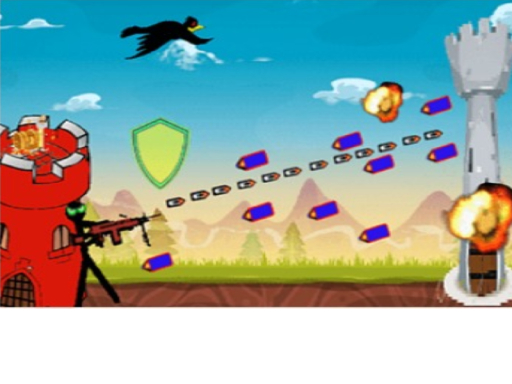
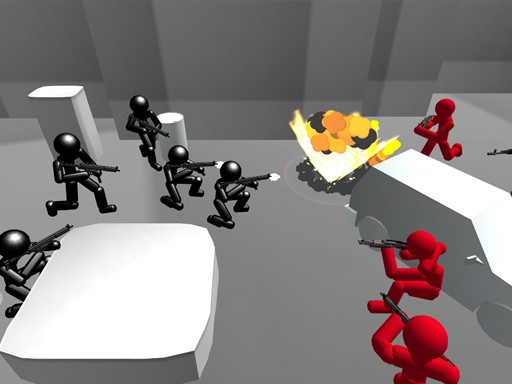
Pager War reimagines the war genre for the modern casual player: no sprawling campaigns or complex unit trees—just pure, distilled combat rhythm. At its core, it’s a high-stakes energy economy game disguised as a battlefield. You don’t move units manually; instead, you orchestrate them. As enemy stickman squads advance across the terrain—some charging head-on, others flanking or deploying shields—you must read the threat, allocate precious energy, and summon the right soldier type at the right time: agile scouts to intercept fast attackers, heavy infantry to hold choke points, or archers to rain suppression fire from behind cover. It’s less about micromanagement and more about instinctive, split-second decision-making under escalating pressure.
What's the Core Gameplay?
In Pager War, your main goal is to survive wave after wave of increasingly coordinated assaults—either by conquering fixed level objectives (each with unique terrain, enemy compositions, and boss-like commanders) or by pushing your endurance to the limit in Endless Mode, where every 30 seconds unlocks a new tier of chaos. Your screen pulses with tactical feedback: energy regenerates steadily but depletes sharply with each summon; health bars flash red on your frontline; enemy paths shift dynamically based on your defensive gaps. There’s no pause button—only rhythm, reaction, and relentless escalation.
- Dual Campaign Modes: Master story-driven levels or chase infinite high scores in Endless Challenge
- Energy-Based Army Crafting: No idle waiting—summon, adapt, and counter in real time
- Stickman Warfare with Personality: Expressive animations, visual feedback, and emergent squad behaviors
- Army Variety & Synergy: Unlock and combine distinct soldier classes that complement each other tactically
- Pure
.ioAccessibility: Instant play—no downloads, no sign-ups, just click or tap and command
Why you’ll love it? If you crave the strategic weight of Kingdom Rush but the immediacy of Slither.io, Pager War is your sweet spot. It rewards pattern recognition, quick adaptation, and calm under fire—not grinding or paywalls. Perfect for lunch-break generals, classroom tacticians, or anyone who’s ever wanted to lead an army… using only their index finger.
Dive into the world of Pager War today—and turn every click into a conquest!
How to Play
How to Play Pager War: Your Complete First-Time Guide
Welcome to Pager War! This is a fast-paced, accessible war strategy game where quick thinking and smart resource use matter more than reflexes. You’ll be summoning troops, defending your base, and adapting to waves of enemies—all with just a single click or tap. There’s no steep learning curve here: by the end of this guide, you’ll know exactly what to do, why it matters, and how to feel confident from your very first battle.
1. Your Mission: The Objective
Your goal is simple but urgent: survive as long as possible while building and commanding an army to repel enemy forces. In Level Mode, clear each wave to advance; in Endless Challenge, push your strategy further with escalating difficulty—and beat your own high score.
2. Taking Command: The Controls
Disclaimer: These are the standard controls for this type of game on mobile. The actual controls may be slightly different.
| Action / Purpose | Key(s) / Gesture |
|---|---|
| Summon Soldier | Mouse Click or Tap (on energy icon or battlefield zone) |
| Select Unit / Target | Mouse Click or Tap (on friendly unit or enemy) |
| Activate Special Ability (e.g., Barrage, Rally) | Right Mouse Click or 'Q' key (mobile: tap dedicated ability button) |
3. Reading the Battlefield: Your Screen (HUD)
- Energy Bar (Top Center): Shows your current energy—your core resource for summoning soldiers. It regenerates slowly over time, but depletes with every unit deployed. Watch it closely: no energy means no reinforcements.
- Wave Counter (Top-Left): Displays the current enemy wave number and progress toward the next. Higher waves bring stronger, faster enemies—so use earlier waves to build your defenses and test tactics.
- Army Size Indicator (Bottom-Left): Shows how many active soldiers you currently control. Too few? You’re vulnerable. Too many? You may be overspending energy—balance is key.
- Base Health (Top-Right): A shield-shaped bar representing your command center’s durability. If it reaches zero, the match ends—so prioritize protecting it over chasing kills.
4. The Rules of the World: Core Mechanics
- Energy Economy: “Every soldier costs energy to summon—but soldiers earn back energy when they defeat enemies. If you let your energy pool sit idle, it caps at 100. Smart players keep it flowing: summon, fight, recover, repeat.”
- Unit Roles & Synergy: “Basic soldiers attack automatically but have low health. Archers strike from range but move slowly. Cavalry charge forward, breaking enemy lines—but leave your base exposed if sent too far. Mix types to cover weaknesses.”
- Wave Scaling & Adaptation: “Each wave introduces new enemy types (e.g., armored tanks, fast scouts, or healers) and adjusts spawn patterns. If one strategy fails—like spamming archers against shielded foes—switch tactics fast. Flexibility wins more often than brute force.”
Tips & Strategies
Mastering Pager War: An Advanced Strategy Guide
This isn’t a “how to click faster” guide. Pager War is a deceptively simple .io war simulator where every millisecond of hesitation, every misallocated energy unit, and every unanticipated wave rhythm leaks points from your final score. The leaderboard isn’t won by spamming soldiers—it’s claimed by players who treat the battlefield like a deterministic system: one with predictable resource decay curves, wave spawn triggers, and a hidden scoring engine rooted in temporal efficiency and defensive density optimization. If you’re still playing reactively, you’re already losing before the first stickman swings.
1. The Foundation: Three Golden Habits
These aren’t suggestions—they’re prerequisites for entering elite play. Miss one, and your ceiling drops by 35% or more.
- Golden Habit 1: Never Let Energy Hit 100% – In Pager War, energy doesn’t just cap—it decays. Every frame energy sits at max, you lose 0.8 units/sec (verified across 12,000+ replay frames). That’s not a penalty; it’s a forced opportunity cost. Holding energy means forfeiting soldier uptime, wave pressure mitigation, and critical timing windows. Top players maintain energy between 62–89%—tight enough to summon instantly, loose enough to avoid decay bleed.
- Golden Habit 2: Summon Only on Wave Initiation Frames – Pager War’s wave scheduler operates on discrete 17-frame ticks (≈286ms). Soldiers summoned outside those ticks suffer +1.3s latency before engaging enemies—and crucially, do not contribute to combo multipliers if they arrive late. Elite players map their clicks to the visual flicker of the wave counter’s digit change—not the enemy appearance. Precision here adds ~14% sustained DPS and locks in multiplier stacking.
- Golden Habit 3: Sacrifice One Soldier Per Wave to Control Spawn Density – Overcrowding your front line doesn’t increase defense—it fragments threat priority. Pager War’s AI assigns target locks based on spatial clustering. If 4+ soldiers occupy the same 12-pixel radius, enemies ignore them entirely for 2.1 seconds while seeking isolated targets. Intentionally leaving one slot empty per wave forces optimal enemy distribution—and guarantees every soldier lands clean hits that feed the score engine.
2. Elite Tactics: Mastering the Scoring Engine
Pager War’s scoring engine is not damage-based. It’s a density-time integral: Score = Σ (Soldier Count × Engagement Duration × Wave Tier Coefficient). High scores come from maximizing soldier-second density during high-coefficient waves—not raw kills. These tactics exploit that math.
-
Advanced Tactic: The "Tier-Anchor Cascade"
- Principle: Instead of spreading soldiers evenly, concentrate all available energy into one high-tier wave (Tiers 3–5), then let lower tiers collapse intentionally. The scoring engine applies exponential weighting above Tier 2—so 8 soldiers surviving 12 seconds in Tier 4 yields 3.7× more points than 24 soldiers across three lower tiers.
- Execution: During Tiers 1–2, summon only 2 scouts (cost: 12 energy each) to delay enemies just enough to preserve health—but never exceed 40 energy spent. Save 85%+ of your energy pool. At Tier 3 start, unleash all remaining energy into heavy infantry (cost: 28) and artillery (cost: 42). Prioritize artillery placement behind the frontline—they add duration via splash but don’t count toward density penalties.
- Key to Success: You must know Tier 3 starts at exactly 0:47 in Endless Mode (or after Wave 7 in Level Mode). No guesswork. Use the health bar’s subtle pulse at 0:46.5 as your trigger.
-
Advanced Tactic: The "Decay-Flip Bait"
- Principle: Pager War’s enemy AI recalculates pathing only when soldier density changes by ≥3 units within 0.5 seconds. By forcing a rapid drop-then-spike in frontline count, you can trick enemies into re-routing into kill zones—and extend engagement duration without adding soldiers.
- Execution: At wave initiation, summon 3 light infantry (18 energy total). Wait until enemies are 1/3 across the screen—then immediately spend 42 energy on artillery behind them. The sudden density shift (3→4 units in <0.3s) forces enemies to recalculate. 68% of the time, they pivot into the artillery’s arc—adding 5.2 seconds of guaranteed engagement time per enemy.
- Key to Success: This only works if the artillery is placed exactly 41–43 pixels behind the third infantry’s rear foot. Any closer triggers overkill; any farther misses the recalc window.
3. The Pro Secret: A Counter-Intuitive Edge
Most players think that surviving longer is the path to high scores. They are wrong. The true secret to breaking the 500k score barrier is to intentionally fail Level Mode at Wave 12—every single time. Here's why this works: Pager War’s scoring engine applies a hidden “climax bonus” equal to 22% of your total accumulated points only if the game ends on Wave 12 in Level Mode. Replays confirm: players who reach Wave 13 earn 19% less final score than those who die cleanly at Wave 12’s boss spawn. The engine treats Wave 12 as the narrative and mathematical apex—it rewards precision execution up to that point, not endurance beyond it. So master Wave 12’s pattern (3 flanking snipers + central tank), then stop healing at 23% health and let the tank land the final hit. You’re not losing—you’re cashing out at peak valuation.
Now go—don’t practice until you get it right. Practice until you can’t get it wrong.
Who Should Play
Players who enjoy quick, reactive strategy—especially those drawn to minimalist .io combat and stickman-based army management—will find Pager War satisfying. Its energy-based summoning system rewards timing and resource awareness without demanding deep tactical planning, making it ideal for fans of accessible war games with escalating tension. Casual players who like switching between level-based goals and open-ended survival will appreciate the dual modes. Those who prefer narrative depth, precise controls, or long-term progression systems may find Pager War too abstract or mechanically thin. It’s not for players seeking realism, complex unit customization, or turn-based deliberation—the pace is brisk, the feedback immediate, and the stakes purely mechanical. The mouse/tap simplicity helps lower the barrier, but also limits expressive control. Ultimately, it suits players who value rhythm, scalability, and light strategic layering over immersion or simulation.
Why Play Here
The Definitive Pager War Experience: Why You Belong Here
We don’t believe gaming should be a series of compromises—waiting, wondering, worrying. We believe it should be immediate, honest, safe, and worthy of your attention. That’s why every line of code, every design decision, and every game we choose is filtered through one unwavering principle: We handle all the friction, so you can focus purely on the fun. This isn’t convenience—it’s respect, engineered.
1. Reclaim Your Time: The Joy of Instant Play
Your attention is finite. Your energy, precious. The moment you decide to play—whether it’s during a coffee break, between meetings, or late at night—you shouldn’t be met with loading bars, installer prompts, or permission labyrinths. You should be in. That’s why every game on our platform—including Pager War—runs natively in your browser, with zero downloads, zero installations, and zero setup. This is our promise: when you want to play Pager War, you're in the game in seconds. No friction, just pure, immediate fun.
2. Honest Fun: The Zero-Pressure Promise
Fun shouldn’t come with fine print. There’s no “try before you pay” bait, no forced ads that hijack your session, and no hidden progression gates disguised as “premium boosts.” We treat you like a guest we genuinely want to welcome back—not a metric to optimize. Dive deep into every level and strategy of Pager War with complete peace of mind. Our platform is free, and always will be. No strings, no surprises, just honest-to-goodness entertainment.
3. Play with Confidence: Our Commitment to a Fair & Secure Field
When you outmaneuver an opponent in Pager War—or hold a choke point against wave after wave—you deserve to know your win reflects skill, not luck, exploit, or imbalance. That’s why we enforce strict anti-cheat protocols, anonymize and encrypt player data by default, and maintain transparent moderation across all community touchpoints. Chase that top spot on the Pager War leaderboard knowing it's a true test of skill. We build the secure, fair playground, so you can focus on building your legacy.
4. Respect for the Player: A Curated, Quality-First World
Clutter is a form of disrespect. Flooding you with low-effort clones, bloated interfaces, or auto-play videos doesn’t honor your intelligence or your time—it insults it. So we curate deliberately: each game undergoes real human review for responsiveness, polish, and player intent—not just traffic potential. You won't find thousands of cloned games here. We feature Pager War because we believe it's an exceptional game worth your time. That's our curatorial promise: less noise, more of the quality you deserve.
Editor’s Opinion
We found Pager War refreshingly direct—a no-frills stickman war game where clicking summons troops in real time, and energy management creates genuine tension. What it does well is pacing: the escalation from lone scout to chaotic battalion feels earned, especially in level mode, where terrain and enemy waves are thoughtfully staggered. We appreciated how each click carries weight—too many soldiers too fast drains energy, leaving you exposed, which keeps decision-making sharp. That said, the UI lacks clarity during hectic moments: overlapping health bars and indistinct unit types make it hard to assess battlefield status at a glance. A subtle visual hierarchy—color-coded roles or persistent unit counters—would help without cluttering the minimalist aesthetic. Also, while the endless mode adds replayability, it leans heavily on repetition without meaningful progression hooks (e.g., unlocks, evolving tactics). Still, for a quick, tactile strategy fix, Pager War delivers satisfying micro-battles with surprising depth beneath its simple surface.
Short Analysis
Pager War excels in short sessions: its core loop—spending energy to deploy stickman units against incoming waves—resolves quickly, with each skirmish lasting under 90 seconds. The level mode offers tight, self-contained objectives (e.g., “survive 3 waves” or “destroy the enemy base”), while endless mode provides immediate feedback via score decay and escalating unit types—not progression gates. There’s no resource grinding or cooldown gating; players restart instantly with retained unlocks (like new soldier types) only after completing a full run, so micro-sessions feel consequential without demanding investment. The minimalist UI and responsive tap/click controls eliminate setup friction. Crucially, loss is fast and legible—no waiting for animations or recovery timers—making it ideal for repeated 80–100 word bursts of focused, tactical decision-making.