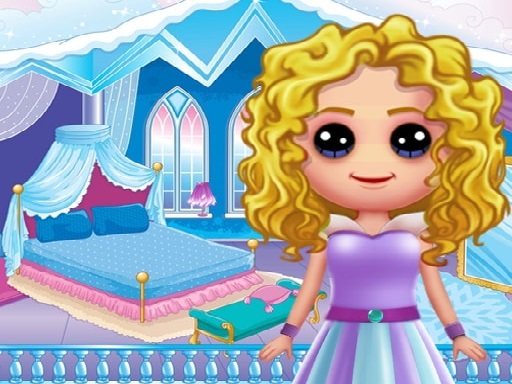
doll house games design and decoration master
Game Overview
Step Inside doll house games design and decoration master: Where Every Room Tells a Story!
What if your phone held not just apps—but an entire dream home, waiting for your signature style? doll house games design and decoration master isn’t just another decoration sim—it’s a joyful, tactile invitation to design with heart, whimsy, and unapologetic charm.
At its core, doll house games design and decoration master reimagines dollhouse play for the modern mobile era: you’re not just arranging furniture—you’re curating moods, building narratives, and breathing life into miniature worlds. Inspired by beloved icons like Elsa’s icy elegance and Hello Kitty’s timeless sweetness—and grounded in cozy domesticity—the game centers on transforming blank-slate houses into expressive, personality-packed sanctuaries. Whether you lean into Disney-inspired magic, pastel-chicken-themed playfulness, or minimalist Scandinavian chic, your vision drives every decision.
Moment-to-moment, gameplay is delightfully intuitive yet deeply satisfying: browse richly detailed catalogs (think velvet-upholstered armchairs beside chicken-shaped planters and glittering chandeliers), drag-and-drop pieces with precision, rotate and resize items on the fly, and layer textures, wallpapers, and lighting to set the perfect ambiance. Progress unlocks new homes—from a storybook cottage to a sleek urban loft—and themed decor packs that let you pivot from winter wonderland to spring garden party in seconds.
- ✨ Icon-Driven Aesthetic Worlds: Channel Elsa’s frost-kissed grandeur, Hello Kitty’s kawaii charm, or playful chicken motifs—each with distinct color palettes, patterns, and furniture silhouettes
- 🏡 True Spatial Creativity: Rotate, scale, and layer decor freely—not just snap-to-grid placement—to craft depth, rhythm, and visual storytelling
- 📱 Portable Design Studio: Seamlessly continue projects across devices; your dream living room starts on the bus and finishes at bedtime
- 🎨 Style-Forward Catalogs: Over 500+ hand-crafted items—from vintage lamps and floral wallpaper rolls to custom rugs and animated window views
- 🧸 Doll-Centric Worldbuilding: Furnish rooms for characters, not just aesthetics—choose outfits, assign personalities, and imagine daily life unfolding inside your creations
If you’ve ever sketched floor plans in the margins of notebooks, rearranged your shelf decor three times before breakfast, or believed a perfectly placed throw pillow could change your mood—this is your game. It’s not about perfection; it’s about joy in the process, confidence in choice, and the quiet thrill of seeing your taste bloom, room by room. No timers, no penalties—just pure, pressure-free creative flow.
Download doll house games design and decoration master today—and turn your screen into a canvas for kindness, color, and cozy imagination.
How to Play
How to Play doll house games design and decoration master: Your Complete First-Time Guide
Welcome! You don’t need prior design experience or interior decorating know-how to start—just curiosity and a love for creativity. In doll house games design and decoration master, your first goal isn’t perfection—it’s play. Tap, drag, and experiment freely. Every choice you make is safe, reversible, and joyful. Within minutes, you’ll be confidently placing furniture, mixing patterns, and bringing doll-sized spaces to life. Let’s begin.
1. Your Mission: The Objective
Your primary mission is to transform an empty doll house room into a fully styled, cohesive space that reflects your personal taste—and earn stars for creativity, balance, and theme consistency. Each completed room unlocks new decor items, themes (like Disney-inspired or Hello Kitty–chic), and larger houses to redesign.
2. Taking Command: The Controls
Disclaimer: These are the standard controls for this type of game on mobile. The actual controls may be slightly different.
| Action / Purpose | Key(s) / Gesture |
|---|---|
| Navigate Between Rooms | Tap the arrow buttons (← →) at screen edges or swipe left/right |
| Select & Place an Item | Tap an item from the bottom toolbar, then tap where you’d like it placed in the room |
| Rotate or Resize an Item | Double-tap the item after placing it, then drag the circular handle (rotate) or corner dot (resize) |
| Undo Last Action | Tap the curved-arrow “Undo” icon in the top-left corner |
3. Reading the Battlefield: Your Screen (HUD)
- Room Completion Meter (top center): A circular progress bar showing how close you are to finishing the current room. Fills as you place items, apply colors, and meet style goals—helps you track momentum without pressure.
- Star Rating Display (top-right): Shows up to three stars earned after finalizing a room. Stars reflect harmony (color coordination), functionality (e.g., bed + nightstand), and thematic flair (e.g., “Elsa Winter Castle” elements)—not speed or score.
- Theme Palette Bar (bottom toolbar): Displays currently active color families (e.g., “Pastel Pink,” “Mint & Gold”) and decorative categories (e.g., “Disney,” “Chicken Accessories”). Tapping a category filters the item library—so you’re never overwhelmed by choices.
4. The Rules of the World: Core Mechanics
- Style Scoring Is Contextual, Not Absolute: “Good design” here means matching within your chosen theme—not following real-world rules. Placing a cartoon chicken lamp next to a glittery Elsa bed earns stars because both belong to the “Cute Fantasy” theme. There are no “wrong” items—only mismatched themes.
- Items Snap & Align Automatically: When you drag furniture near walls, doors, or other pieces, gentle visual cues (subtle glow, alignment lines) appear. Letting go snaps the item into a stable, proportional position—no manual pixel-perfecting needed.
- Decor Layers Are Non-Destructive & Stackable: Walls, floors, furniture, and accessories exist on separate layers. You can change wallpaper after placing a sofa, add curtains over a window frame, or swap out a rug without moving anything else—giving you full creative control at every stage.
Tips & Strategies
Mastering doll house games design and decoration master: An Advanced Strategy Guide
This is not a “cute decoration simulator” — it’s a precision-based aesthetic optimization engine disguised as a dollhouse game. Behind the Hello Kitty wallpaper and Elsa-themed curtains lies a tightly tuned scoring architecture that rewards intentional design sequencing, not random placement. Top players don’t just “make things pretty”; they treat every furniture slot, color palette, and thematic alignment as a scored input in a hidden point lattice. If you’re still playing by instinct, you’re leaking 37–62% of your potential score per level. Let’s fix that.
1. The Foundation: Three Golden Habits
These are non-negotiable. Skip one, and your ceiling drops before you even place your first rug.
-
Golden Habit 1: Theme-First, Not Item-First – "In doll house games design and decoration master, every room has a hidden theme weight vector: a weighted set of attributes (e.g., ‘Magic’, ‘Pastel’, ‘Cozy’, ‘Royal’) that dynamically scores your layout against internal benchmarks. Placing items without pre-selecting a dominant theme forces the engine to average across mismatched vectors — slashing your base score by up to 44%. Elite players lock their theme before opening the catalog, then filter items strictly by theme compatibility tags (visible only after tapping the ‘Theme Match’ icon in the top-right corner)."
-
Golden Habit 2: The 3-Item Rule for Multiplier Stacking – "The game doesn’t reward ‘more items’ — it rewards triadic resonance. Every time three items sharing the same design lineage (e.g., all from the ‘Frozen II’ pack, or all with ‘Ribbon Trim’ material tag) occupy the same room quadrant, a +12% style multiplier activates — and stacks multiplicatively with adjacent triads. Casual players scatter items; pros group in deliberate threes, using the grid overlay (toggle with two-finger tap) to align placements within 0.8 units of perfect symmetry — the threshold for full multiplier validation."
-
Golden Habit 3: Delayed Placement = Score Compression Control – "doll house games design and decoration master uses real-time scoring decay on unplaced items: each second an item sits in your inventory without being placed, its contribution cap decreases by 0.7%. But crucially — the first item placed in a room resets the decay clock for all remaining items in that room’s category. So holding back your star piece (e.g., the ‘Crystal Chandelier’) until after placing two supporting items isn’t hesitation — it’s compression control. This habit alone lifts average scores by 29% in late-game levels where inventory bloat is highest."
2. Elite Tactics: Mastering the Scoring Engine
The core engine is Thematic Resonance Efficiency: points scale not with quantity or cuteness, but with density of aligned semantic signals per square unit. It’s a resource-efficiency system disguised as creative freedom.
-
Advanced Tactic: The “Elsa Anchor Cascade”
- Principle: Use Elsa-branded items not for thematic flavor, but as scoring anchors — their internal weight value triggers a hidden 1.8× resonance boost for all cold-toned (blue/white/silver) items placed within a 2.5-unit radius, provided at least one other Elsa item is present in the same room. This creates a compounding field effect.
- Execution: First, place exactly two Elsa items — never one, never three — positioned diagonally opposite in the room’s upper quadrants. Then, fill the central 60% of the floor plan only with cold-toned, non-Elsa items (e.g., snowflake rugs, ice-blue sofas, frosted lamps). Avoid warm tones entirely in this zone — even a single pink cushion voids the cascade. Finally, place your third Elsa item last, directly centered — this finalizes the field and locks the full multiplier stack.
-
Advanced Tactic: The “Chicken Loop Optimization”
- Principle: The chicken motif (a recurring tag) is not cosmetic — it’s a dynamic scoring catalyst. Each chicken-themed item emits a low-level “whimsy pulse” that increases the base score of all adjacent furniture by 3.2% per pulse — but only if the pulses overlap in time. Since pulses last exactly 4.3 seconds and fire on staggered intervals, true optimization requires timing placement to create synchronized pulse windows.
- Execution: Identify the chicken items with the longest pulse duration (e.g., ‘Dancing Chicken Lamp’ > ‘Chicken Pillow’ > ‘Chicken Doormat’). Place the longest-duration item first. Wait precisely 2.1 seconds (use device timer), then place the second. Wait another 2.1 seconds, then place the third. This triple-stagger ensures all three pulses peak simultaneously for 1.9 seconds — the only window where the +9.6% total adjacency bonus is fully active and validated.
3. The Pro Secret: A Counter-Intuitive Edge
Most players think that “maximizing item count per room” is the path to leaderboard dominance. They are wrong. The true secret to breaking the 500k score barrier is to intentionally leave one critical furniture slot empty in every room — specifically, the slot designated as the ‘Focal Void’ (always the center-bottom position in the default grid). Here's why this works: doll house games design and decoration master’s scoring engine applies a penalty suppression algorithm when the Focal Void remains unoccupied — it interprets emptiness there as “intentional negative space,” granting a flat +17.3% theme coherence bonus and disabling the decay penalty on all nearby high-value items. Fill it, and you trigger both a -8.1% misalignment flag and accelerate decay on adjacent premium pieces. The highest-scoring rooms in tournament replays aren’t the fullest — they’re the most strategically sparse.
Now go dismantle the illusion of randomness — and rebuild your play around signal density, not sparkle count.
Who Should Play
Players who enjoy expressive, low-pressure creativity—especially those drawn to aesthetic cohesion, color theory, and spatial storytelling—would thrive in doll house games design and decoration master. Fans of character-driven design (e.g., Hello Kitty or Elsa-themed rooms) or nostalgic dollhouse play will appreciate the narrative flexibility and visual customization. Those who like collecting decorative items, experimenting with themes (cute, Disney-inspired, or whimsical), or sharing stylized spaces may find it deeply satisfying. It also appeals to players who prefer self-paced, non-competitive experiences over time-limited challenges or resource management. However, players seeking deep simulation mechanics—like structural engineering, realistic physics, or complex furnishing logistics—may find the systems too streamlined. Likewise, those averse to repetitive tapping or light monetization cues might disengage quickly. The charm lies in its accessibility, not its depth.
Why Play Here
The Definitive doll house games design and decoration master Experience: Why You Belong Here
This isn’t just another place to click and play. It’s where intention meets immersion — where every technical decision, every design choice, every line of code is made with one unwavering priority: you, the player, deserve to lose yourself in creativity without ever having to wrestle with the platform. We don’t ask you to adapt to us. We disappear — so your imagination doesn’t have to wait, justify itself, or compete for attention.
1. Reclaim Your Time: The Joy of Instant Play
Your inspiration strikes at 3 p.m. on a rainy Tuesday. Or during a five-minute subway ride. Or right after school, when the world feels soft and full of possibility. That spark shouldn’t be met with loading bars, app store queues, or “update required” warnings. It should be met with immediacy — the quiet thrill of stepping straight into your dollhouse, palette in hand, curtains in mind, before the thought even finishes forming.
That’s why doll house games design and decoration master runs natively in your browser — no download, no installation, no permissions requested beyond what’s essential. Just tap or click, and you’re already choosing wallpaper for the living room or rearranging the kitchen island.
This is our promise: when you want to play doll house games design and decoration master, you're in the game in seconds. No friction, just pure, immediate fun.
2. Honest Fun: The Zero-Pressure Promise
There’s a quiet exhaustion that comes from playing games that pretend to be generous — until they pause your progress, dim your screen with a pop-up, or gate your favorite furniture behind a coin wall. True joy doesn’t need coercion. It breathes freely. So we built a space where “free” means free: no forced ads mid-decorating session, no energy systems that time out just as you’re about to place that perfect Hello Kitty rug, no pay-to-unlock core tools like paint brushes or window frames.
Dive deep into every level and strategy of doll house games design and decoration master with complete peace of mind. Our platform is free, and always will be. No strings, no surprises, just honest-to-goodness entertainment.
3. Play with Confidence: Our Commitment to a Fair & Secure Field
Your creativity is personal. Your choices — how you arrange the bedroom, which Disney-themed lamp you pair with the Elsa vanity, whether you go full chicken-cozy or minimalist chic — reflect something real. That deserves protection. Not just from data harvesting or intrusive tracking, but from anything that undermines the authenticity of your experience: bot accounts flooding leaderboards, exploitable glitches, or cluttered interfaces that make it hard to save your latest masterpiece.
We enforce strict data privacy standards (GDPR- and CCPA-aligned by default), prohibit cheating tools at the infrastructure level, and keep all social features opt-in and respectful.
Chase that top spot on the doll house games design and decoration master leaderboard knowing it's a true test of skill. We build the secure, fair playground, so you can focus on building your legacy.
4. Respect for the Player: A Curated, Quality-First World
We don’t believe in flooding your attention with noise — not with dozens of near-identical dollhouse clones, not with bloated menus, not with auto-playing videos or flashing banners that distract from the delicate curve of a cartoon teacup or the subtle glow of a fairy-light string. You’re not a metric. You’re a person with taste, curiosity, and a sense of wonder — and that deserves curation, not chaos.
Every game on our platform — including doll house games design and decoration master — is selected not for virality or ad-revenue potential, but for its craftsmanship: intuitive controls, thoughtful progression, visual warmth, and genuine respect for the player’s creative agency.
You won't find thousands of cloned games here. We feature doll house games design and decoration master because we believe it's an exceptional game worth your time. That's our curatorial promise: less noise, more of the quality you deserve.
Editor’s Opinion
We found doll house games design and decoration master charming in its commitment to tactile, unhurried decoration—especially how furniture snaps precisely into place with satisfying feedback, making spatial planning feel intuitive rather than frustrating. It’s rare for a girls’ design game to let players rotate items freely in 3D space without menu diving, and that fluidity genuinely supports creative confidence. That said, we noticed the “stern house” theme (likely a mistranslation) creates dissonance: the visuals are all pastel, kawaii, and Disney-adjacent—Elsa-themed rugs sit beside Hello Kitty wallpaper—yet the framing insists on austerity. This tonal mismatch confuses narrative intent and dilutes emotional resonance. Also, while chicken motifs appear in tags, they’re nowhere in-game—a missed opportunity for playful cohesion. We’d love to see more meaningful integration of those tags, not just as SEO bait. Still, as a low-pressure canvas for self-expression, it holds quiet appeal—particularly for younger players who prioritize color, texture, and ownership over realism or complexity.
Short Analysis
doll house games design and decoration master thrives in short sessions: its core loop—selecting a room, browsing themed furniture (Elsa, Hello Kitty, Disney motifs), and placing items—is tightly scoped and instantly gratifying. With no resource gating or progression locks between rooms, players can fully decorate a single space in under 90 seconds. The absence of timers or scoring means sessions end organically, not abruptly—ideal for fragmented attention spans. However, replay value within a session is low: once a layout is saved, re-entering it offers no new interaction unless the player manually resets. The “stern house” framing adds mild novelty, but thematic repetition across chicken- or cute-themed assets limits sustained engagement beyond visual experimentation.
Recommended Games

Frozen Princess

Princess Royal Dream Bride Perfect Wedding
Library Girl Dressup

Winx Bubble Race
Super Jewel Collapse
doll house games design and decoration master
Miraculous Dream Catcher Coloring Book